Trump issues disturbing warning to US nationals as administration takes steps to strip citizenship
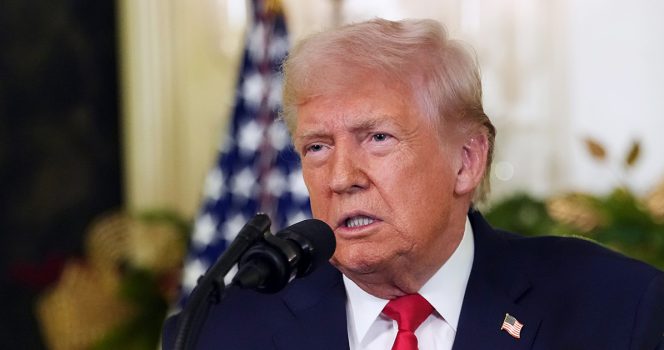
Donald Trump has long made immigration enforcement one of the defining pillars of his political identity. From border security to deportation policies, his rhetoric has consistently emphasized strict control and tough consequences for those who break the law. But in a recent interview with The New York Times, the former president took that stance a step further, delivering comments that alarmed many Americans by suggesting that even U.S. citizens could one day face the loss of their citizenship.
For centuries, naturalization has been the pathway through which immigrants become full members of American society. According to USA.gov, naturalization is “the process of voluntarily becoming a United States citizen,” involving several steps such as passing a civics test, demonstrating knowledge of English, and meeting legal and moral requirements. It has traditionally been viewed as the final milestone of the immigrant journey—a moment of celebration that represents belonging, opportunity, and security.
To qualify, applicants must meet clear standards: they must generally be at least 18 years old, demonstrate basic English skills depending on age and circumstances, and show what the government defines as “good moral character.” Once granted, citizenship is commonly seen as permanent, offering individuals the same rights and protections as those born in the country. Yet Trump’s recent remarks have cast doubt over that long-standing assumption.
In early December, Trump stated he was “absolutely” in favor of denaturalizing certain citizens, particularly those he believes committed crimes or obtained citizenship under flawed oversight. “We have criminals that came into our country and they were naturalized maybe through [President Joe] Biden or somebody that didn’t know what they were doing,” he said. “If I have the power to do it—I’m not sure that I do, but if I do—I would denaturalize, absolutely.”
Those words alone raised concern, but they were followed by more pointed statements that intensified the debate. In another interview, Trump said his administration was “examining the criteria for taking away citizenship,” adding that officials were looking closely at “many of the people that came in from Somalia.” He went on to claim that some of these individuals “hate our country,” and when asked directly if he would support stripping citizenship from Americans he believed deserved it, he replied, “If they deserve to be stripped, I would, yes.”
Such comments have sparked widespread discussion about the limits of presidential power and the legal framework surrounding denaturalization. In practice, stripping someone of U.S. citizenship is neither quick nor simple. The Immigrant Legal Resource Center reports that from 1990 to 2017, an average of only about 11 denaturalization cases were opened each year. These cases typically involve serious allegations of fraud during the naturalization process and must go through lengthy legal proceedings. Citizenship can only be revoked by judicial order, either through civil court actions or criminal convictions tied to naturalization fraud.
Still, critics argue that even the suggestion of mass denaturalization can create fear and uncertainty among immigrant communities. The idea that citizenship might not be permanent undermines the sense of stability that naturalization is meant to provide. For many, it raises troubling questions about who truly belongs and whether equal protection applies to everyone.
The American Civil Liberties Union (ACLU) responded sharply to Trump’s comments, calling the idea of stripping Americans of their citizenship “systemic and chilling.” In a statement, the organization warned that such rhetoric makes U.S. citizens fear that mistakes made years earlier—sometimes minor or unintentional—could suddenly be used against them. “They have made U.S. citizens fearful that mistakes made years ago on their past applications could be used to target them, take away their citizenship, and destroy their lives,” the statement read.
The ACLU also highlighted the broader consequences of this climate of fear. According to the organization, aggressive denaturalization talk discourages lawful permanent residents from even pursuing citizenship, worrying that the risks may outweigh the benefits. What was once seen as a proud and joyful milestone—raising a hand and swearing allegiance to the country—now carries an undercurrent of anxiety and suspicion for many families.
Supporters of Trump argue that enforcing the law is essential and that citizenship obtained fraudulently should not stand. They believe that strong language sends a necessary message about accountability and national security. Critics, however, counter that broad statements about revoking citizenship risk crossing a dangerous line, transforming legal safeguards into political tools and placing millions of naturalized Americans under unnecessary stress.
At the heart of the debate lies a deeper question about what citizenship truly means. Is it an unbreakable bond between a person and a nation, or a conditional status that can be withdrawn based on shifting political priorities? For generations, the United States has promoted itself as a country where immigrants can build new lives with the promise of equality and permanence. Any move that threatens that promise reshapes not only policy, but the national identity itself.
As discussions around immigration, loyalty, and security continue to dominate political headlines, Trump’s remarks serve as a reminder of how powerful words can be. Even without immediate legal changes, the impact of such statements is already being felt—in conversations at kitchen tables, in immigrant communities, and in the minds of those who once believed their citizenship placed them beyond question. The future of this debate will likely depend not just on courts and laws, but on how Americans collectively define fairness, belonging, and the meaning of being a citizen.