Fuzzy Caterpillar on Your Porch? Here’s Why You Shouldn’t Touch It
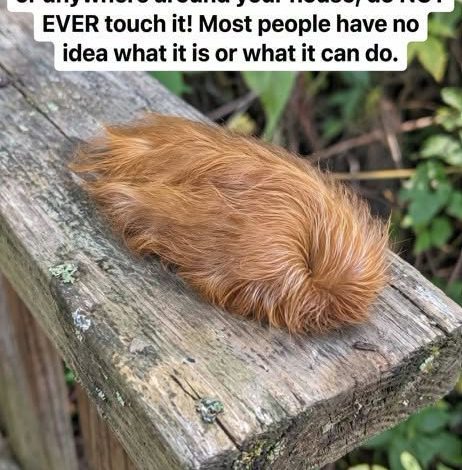
You’re out on the porch, leaning on the wooden railing, when you spot it. A little orange puff, soft as a cotton ball, slowly creeping along the wood. It looks like a tiny toupee with legs.
Your first thought might be, “Aww, how cute!” Your second thought might be, “Wait… what is this thing?”
That’s exactly the question behind this viral photo. So let’s find out what this is, and why this kind of fuzzy caterpillar is one you should admire with your eyes, not your fingers.
So, What Is This Fuzzy Caterpillar?
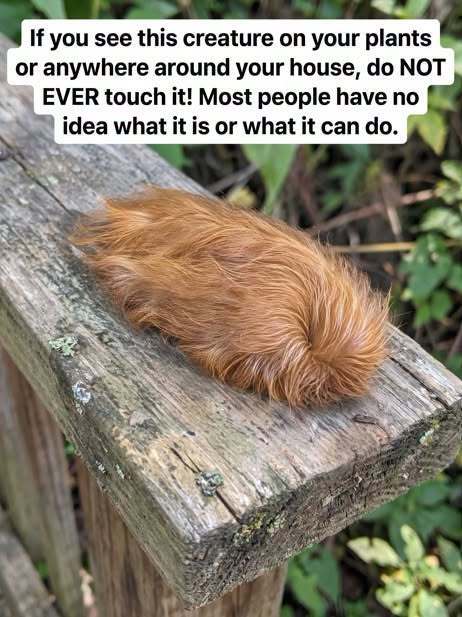
The original post doesn’t name the exact species. But the shape and look are a close match for a well-known stinger: the puss caterpillar.
According to the University of Florida’s Institute of Food and Agricultural Sciences (UF/IFAS), the puss caterpillar is the larva of the southern flannel moth. Its scientific name is Megalopyge opercularis.
Here’s how UF/IFAS describes it:
- It’s about 2.5 cm long, roughly an inch.
- It’s covered in soft hairs that can range from gray to brown in color.
- Its hairs form a kind of fluffy coat, with a “tail” of hair that sticks out past the body.
- It’s often found on trees like oaks and elms.
We can’t say for sure from one photo that it’s this exact species. Lots of caterpillars are hairy. But it certainly looks like a puss caterpillar, and that alone is a good reason to keep your hands off.
Why Something So Soft Can Hurt So Much
Here’s the sneaky part. That fluffy coat isn’t the whole story.
UF/IFAS explains that hidden under the soft hair are venomous spines. They’re hollow, and they’re connected to poison glands. When you touch the caterpillar, those spines can break off in your skin and release venom.
So the fuzz is basically a disguise. It looks like a plush toy. But underneath, it’s armed.
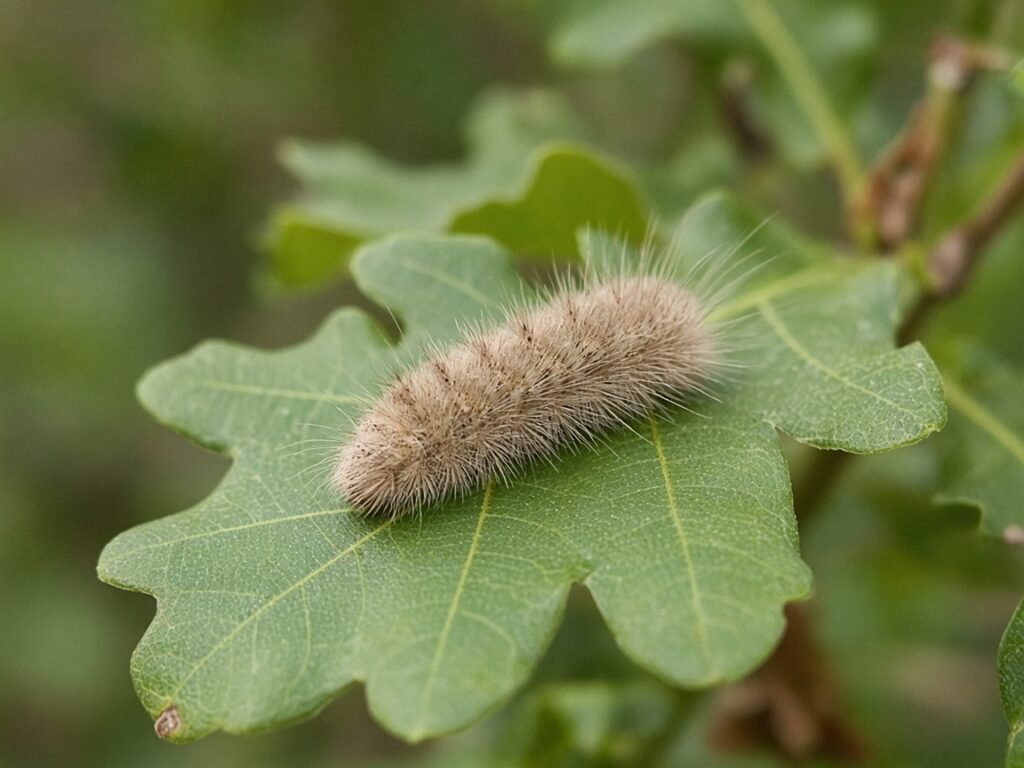
This is a defense trick. The caterpillar is slow and can’t run away from birds and other predators. So instead, it makes itself painful to grab. Many fuzzy caterpillars around the world use some version of this trick, with irritating or venomous hairs and spines.
What Happens If You Touch One?
Touching a stinging caterpillar can be a very unpleasant surprise. According to the original post, contact can cause:
- Burning feelings on the skin
- Intense itching
- Redness and swelling
- Painful skin rashes
UF/IFAS adds that a puss caterpillar sting can cause burning pain and may leave a grid-like rash where the spines touched the skin.
And if the hairs get into your eyes? That can cause serious eye irritation. That’s one more reason to keep your hands, and your face, at a safe distance.
The Tricky Part: Looks Can Fool You
This is where things get confusing. Dangerous caterpillars can look a lot like harmless ones.
Some fuzzy caterpillars are totally fine to watch crawl by. Others can sting. And for most of us, there’s no quick way to tell them apart just by looking.
Bright colors and fluffy coats might seem friendly. But they aren’t an invitation to pick something up. In nature, a pretty outfit can sometimes be a warning sign.
So here’s the easiest rule ever: if it’s fuzzy and you don’t know what it is, don’t touch it.

Keep Kids and Pets in the Loop
Kids are natural explorers. A soft, orange, crawling fluff ball? That’s basically a magnet for little hands.
A few friendly habits can help:
- Teach “look, don’t touch.” Make it a fun game of spotting bugs instead of catching them.
- Check play areas. Glance at railings, benches and swings before kids climb on.
- Use a stick or leaf. If you need to move a caterpillar off a path, nudge it with something, not your hand.
- Watch curious pets. Dogs and cats like to sniff and paw at moving things.
The goal isn’t to make anyone scared of bugs. Caterpillars are part of a healthy garden, and many turn into moths and butterflies. It’s just about being smart and keeping a little distance.
Oops, I Touched It! What Now?
Accidents happen. Maybe you brushed against one on a railing or picked up a leaf without looking. Here’s what to do, based on the original post and the advice from UF/IFAS:
- Don’t rub the spot. Rubbing can push the tiny hairs or spines deeper into your skin.
- Use tape. Gently press a piece of sticky tape on the area and pull it off. Repeat with fresh tape to lift out the hairs.
- Wash the area. Use soap and water to clean the skin.
- Try an ice pack. Cold can help ease the burning and swelling.
- Get medical help if it’s bad. Seek care for severe reactions, or if anything got into your eyes.

The tape trick is the one most people don’t know about. It’s simple, and you probably have a roll in a kitchen drawer right now. Any sticky tape will do in a pinch, from clear packing tape to the kind you use for wrapping gifts. Press it down lightly, lift it away, and use a fresh strip each time so you aren’t just moving the hairs around. It’s a small step, but it can make a big difference in how your skin feels afterward.

Smart Habits for Gardeners
If you spend a lot of time in the yard, a few simple habits can save you from a nasty sting:
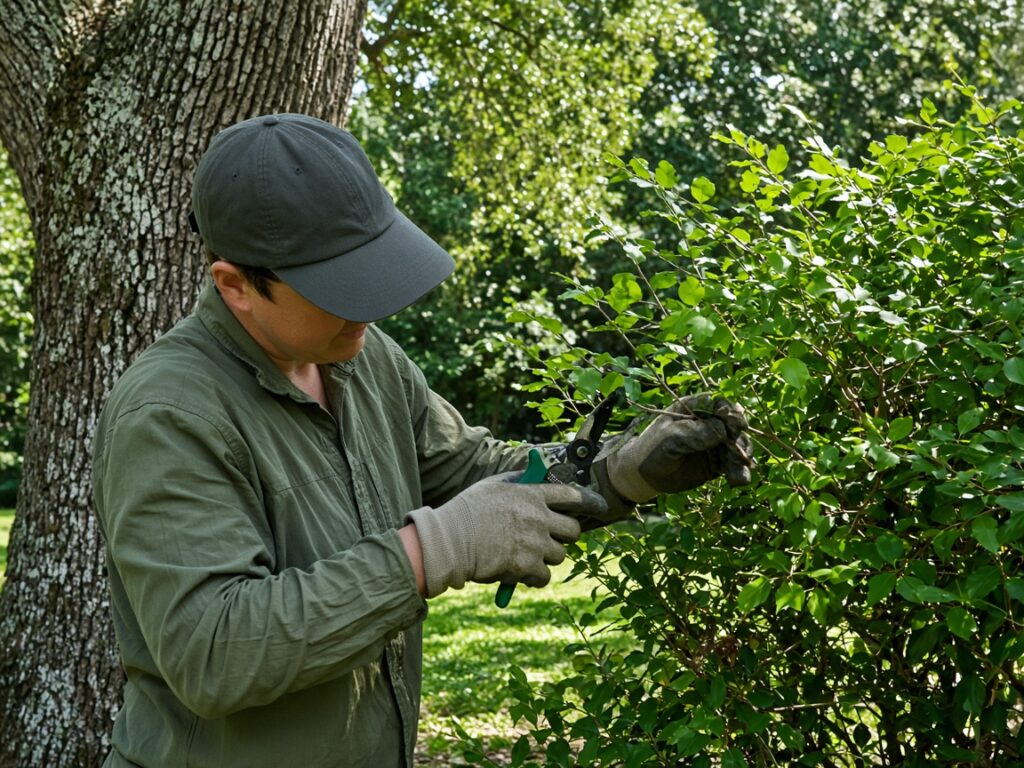
- Wear gloves when pulling weeds, trimming bushes or raking leaves.
- Choose long sleeves when working near trees and shrubs.
- Look before you grab. Check railings, fences and branches before putting your hand down.
- Shake out gear. Give gloves and garden tools a quick look before using them.
Since UF/IFAS notes puss caterpillars are often found on oaks and elms, be extra careful around those trees.
Why We Love Them Anyway
Let’s be fair to the little guy. That fuzzy caterpillar isn’t out to get anyone. It’s just trying to grow up and turn into a moth without becoming a bird’s lunch.
Its stinging coat is a survival tool, not a weapon aimed at people. If we leave it alone, it will happily leave us alone too.
So the next time you see a little orange fluff ball on your porch, snap a photo, show your friends, and let it go on its way. Nature is full of these small surprises, and half the fun is learning about them.
The Bottom Line on This Fuzzy Caterpillar
Here’s what to remember:
- The caterpillar in the photo looks like a puss caterpillar, the larva of the southern flannel moth.
- Under its soft hair are venomous spines that can sting.
- Contact can cause burning, itching, redness, swelling and rashes.
- Harmful and harmless caterpillars can look alike, so don’t touch unknown ones.
- If you get stung: don’t rub, use tape, wash, try ice, and get help for severe reactions.
Just because something looks soft and adorable doesn’t mean it’s safe to touch. Admire your fuzzy caterpillar from a distance, and you’ll both have a much better day.
Thank you for stopping by and learning about our fuzzy little porch visitor! This article is for entertainment and general info only, so for any sting or reaction, please check with a medical professional. Stay curious, stay careful, and enjoy the outdoors!