Low Blood Sugar on a Plane: A Passenger’s Fight to Get Help
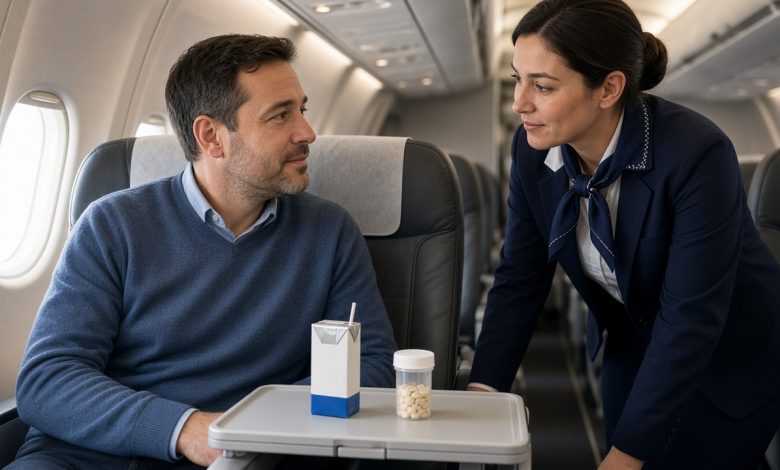

A quiet flight is a reasonable wish. Having to negotiate treatment for low blood sugar on a plane is not. In this shared online story, a passenger flying from Chicago to Seattle finds herself explaining a medical need while the people beside her insist she should not eat.
This is a retelling of an unverified narrative, not confirmed reporting about an airline or identifiable family. The source describes a woman with Type 1 diabetes, a disagreement with nearby parents, and a flight attendant who puts her immediate needs first.
There is also an important distinction between telling the story and offering health information. The narrative starts with a protein bar, but that does not make a protein bar the recommended first treatment for a low. Practical guidance appears separately below.

A Snack Becomes an Argument
The passenger is exhausted and feels her blood sugar dropping. She reaches into her bag for a protein bar, hoping to eat before she feels worse. Before she opens it, the mother beside her asks her not to, saying her son is sensitive.
The narrator puts the bar away rather than start an argument. She decides to wait for the snack cart and ask the flight attendant for something. In the story, that attempt to avoid conflict only delays attention to her own needs.
The child is described as making noise and kicking the seat ahead. Those behaviors do not tell us whether he has a disability, sensory needs, or another difficulty. We cannot diagnose or dismiss a child’s needs from a stranger’s description.

The Parents Try to Speak for the Whole Row
When the cart reaches them, the passenger asks for a snack. The father interrupts, telling the attendant that their row will have no food or drinks because of their son’s sensitivities.
The narrator tries to explain that she needs to eat. He cuts her off. She presses the call button, and both parents continue objecting to her request instead of letting her speak for herself.
By now, she describes shakiness, fatigue, and difficulty concentrating. She recognizes these as warning signs from her own experience of diabetes. The dispute has moved beyond an awkward seating arrangement: she is trying to respond to a medical problem while strangers keep interfering.

Clear Words Bring the Crew Into the Situation
When the attendant returns, the narrator states plainly that she has Type 1 diabetes, her blood sugar is dropping, and she needs to eat immediately. She also explains that the neighboring passengers have been trying to prevent it.
The attendant checks whether the low is happening now. The mother disputes the account, describing their request as consideration for their child. The father argues that paying for the seats gives them a right to protect his comfort.
The attendant’s response separates those issues. The child’s needs can be discussed with the crew. Buying seats does not give the parents authority over another passenger’s medical care. The narrator does not have to win a personal argument before receiving help.

Help Arrives Before the Debate Is Settled
Other passengers speak up. One says he has watched her trying to eat; another confirms hearing the parents interrupt. Their support gives the attendant more context, but the immediate priority remains the narrator’s condition.
Asked whether she has treatment with her, the passenger says she has glucose tablets. She takes them according to her usual diabetes plan. The attendant brings juice and stays nearby to make sure she has what she needs.
The parents grow quieter. Their child continues to make noise, but that is separate from the passenger’s right to respond to her blood sugar. She does not need to prove that one person’s needs are imaginary in order to have her own taken seriously.

A Boundary for the Rest of the Flight
The attendant later checks how the passenger feels. She reports improvement. When the father challenges the decision again, the attendant directs him to discuss his son’s sensitivities with the crew instead of restricting someone else’s treatment.
Another nearby traveler points out the difference between asking for an accommodation and ordering a stranger not to eat. The parents object to the attention, but the attendant asks them to lower their voices and stop interfering.
The source says further harassment would be reported to the senior crew member. After that warning, the narrator eats her bar, drinks juice, and monitors her blood sugar. The parents stop trying to control her actions, even though the cabin does not become perfectly quiet.
It is tempting to read the scene as a contest over who deserves sympathy. That misses the practical issue. The crew can hear concerns from both sides without allowing either family to decide whether another adult may receive care. No one in the story needs to settle a debate about the child’s diagnosis before the passenger can treat her low.
The Story Continues Through Landing
About twenty minutes before landing, the father suggests she could have handled matters differently. She reminds him that she first put the food away, then waited for the cart, asked politely, and used the call button.
Her response is not a new demand for special permission. It is a reminder of the requests already ignored. She says the child’s comfort matters, but so does her health. Neither parent continues the argument.
After landing in Seattle, the attendant checks on her again. The narrator says she is doing better and thanks her. A supportive passenger also wishes her well. She leaves relieved, though frustrated that getting help required such a struggle.

The ending includes no arrest, airline punishment, or apology from the parents. Those would be additions, not details from the source. Instead, it closes with the passenger feeling heard by the attendant and the travelers who supported her. That modest finish matters: receiving help, rather than getting revenge, is the actual resolution of the account.
Low Blood Sugar on a Plane: Information Outside the Story
The CDC’s low blood sugar guidance describes the 15-15 approach for many people who are awake and able to swallow: take 15 grams of fast-acting carbohydrate, wait 15 minutes, and check blood sugar again. Follow your prescribed plan, including any individual instructions that differ.
Examples include the appropriate amount of glucose tablets or measured juice. A protein bar is not automatically a suitable fast treatment; fat and other ingredients can slow absorption. Do not use this story as a reason to delay treating a low while waiting for a cart or avoiding an uncomfortable conversation.
Severe symptoms need urgent help. Someone unconscious or unable to swallow safely should not be given food or drink by mouth. Alert the crew immediately; emergency care and prescribed glucagon may be needed. This brief information is not a substitute for personal medical instruction.
The story’s useful distinction is that competing needs call for assistance, not a passenger-issued ban. Ask the crew early, describe the problem clearly, and let them help. Respect for a family’s concerns and prompt attention to a medical need do not have to be opposites.
The practical takeaway is not to rehearse a perfect speech for a disagreement. Someone feeling unwell may not have the energy for that. A short statement of the medical need and an early request for crew assistance are more useful than trying to persuade neighboring passengers first. The story’s lengthy argument is part of its narrative, not a recommended sequence to copy. No reader should feel required to repeat all those attempts before seeking help with a suspected low.
Thanks for reading, and here’s to kinder seatmates and calmer journeys. This unverified story is for entertainment, with general health information only—not personal medical advice. Use your clinician’s plan and seek urgent help when needed.