My wife, Clara, took our daughter and our son on a short trip to visit her sister
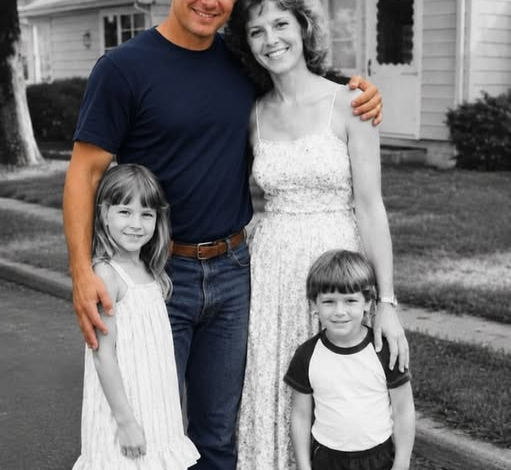
My wife, Clara, took our daughter and our son on a short trip to visit her sister, who lived by the ocean. I was overwhelmed with work at the time, so they went without me. It was supposed to be a simple weekend getaway, a chance for the children to see the coast and for Clara to catch up with family after months of quiet tension in our household. I kissed them goodbye in the driveway, watching our sedan pull away into the early morning mist, expecting them back by Sunday evening.
Instead, the phone rang late Sunday night. It was Clara’s sister, Gwen, her voice shaking through the receiver.
“Andrew, they never made it,” Gwen said. “They left my sister house hours ago, but they didn’t show up here. Are you sure they left when you said?”
That single phone call dismantled the foundation of my life. When the police started searching for them the next morning, all they found was their empty car parked precariously on a bridge over a wide, fast-moving river. The doors were unlocked, the keys were in the ignition, and their bags were still in the trunk. The search went on for years. Divers scoured the river over and over again, braving the heavy undercurrents and murky depths, but they found nothing. No traces, no clothing, no answers.
The police had countless theories, but the most likely one was that the car had skidded off the bridge in the dark, and they had been thrown into the water by the impact and swept away by the current toward the sea.
Two years later, with no evidence and no bodies recovered, the police officially declared them dead.
After that, I was simply existing. Every day, I would come home from work to an empty house that felt too large and too quiet. I never touched my son’s or daughter’s rooms. Their toys, their books, their unmade beds remained exactly as they had left them forty years ago. It was as if I believed that one day they would walk through the front door, complaining about being hungry or asking for help with their homework. I kept the lights on in the hallway every night. I paid the property taxes, kept the lawn mowed, and let the rest of the world move forward while I stayed frozen in that single weekend.
Forty years have passed, and my heart still aches with a dull, constant weight that never quite fades. Age caught up with me slowly, turning my hair white and making my joints stiff. Then, one day, my doctor delivered the news that changed my remaining horizon.
“Your blood pressure and your heart rhythm are giving us real warning signs, Andrew,” the doctor said, looking across the desk with a somber expression. “You can no longer live alone. You need someone to look after you day to day.”
I sat in the clinic chair, staring at the linoleum floor. “I manage fine on my own.”
“You fell twice last month,” the doctor reminded me gently. “Living in a two-story house by yourself is no longer safe. You need assistance.”
When I told my nephew about the doctor’s verdict during his weekly visit, he did not hesitate. “We will sell the house, Uncle Andrew,” he said, pulling up a chair beside mine. “You can move in with my family. We have the spare room downstairs.”
“Sell the house?” I asked, the words feeling heavy in my mouth. “Everything I have is here.”
“You cannot stay here alone anymore, and maintaining this place is too much,” my nephew replied, his tone firm but kind. “It is time to let go of the empty rooms.”
That meant I had no choice but to finally pack up my wife’s, my daughter’s, and my son’s belongings. The thought of sorting through four decades of preserved grief made my chest tighten. I put it off for as long as I could, until the real estate agents were scheduled to come take photographs.
On a Tuesday afternoon, I finally pushed open the door to my daughter’s bedroom. The air inside smelled of old dust and faded lavender sachet packets. Sunlight streamed through the lace curtains, illuminating dust motes dancing in the stillness. I started folding clothes that still hung in the closet, placing them into cardboard boxes with trembling hands.
As I worked my way across the room, I became so tired and overwhelmed that I dropped onto her twin bed. The mattress groaned beneath my weight, and then I heard a sharp cracking sound beneath the springs.
I sat up, frowning, and pressed my hand against the mattress surface. Beneath the faded floral quilt, I felt something solid and rectangular, hidden deep within the padding. I stood up quickly, pulled the quilt away, and turned the mattress over.
Running down the center was a roughly stitched seam, the thread a different color from the rest of the factory stitching.
My hands shook as I walked to the kitchen and grabbed a pair of sharp sewing scissors. I returned to the room, knelt beside the bed, and carefully cut open the stitches.
I reached inside the dark gap within the mattress and pulled out a heavy metal box that had been hidden there for decades. It was covered in a layer of dust, the latch tarnished with age.
I sat back on the floor, my heart hammering against my ribs. I lifted the latch. It clicked open with a dry, metallic sound.
Inside was a handwritten note. It was written in Clara’s familiar, elegant handwriting.
My breath caught the moment I read the first line.
“Andrew, if you’re reading this, then something has happened to me, and I trust that enough time has passed for the truth to finally come to light.”
I stared at the words, the paper trembling in my fingers as the silence of the empty house pressed down on me.
“If you are holding this note, it means I am either gone or the danger that forced me to disappear has finally faded,” Clara’s handwriting continued across the yellowed pages. “I know what people think happened. I know the police found the car on the bridge. We left it there on purpose, rolling it out of gear with the parking brake off so it would look like an accident in the dark. We did not fall into the river, Andrew. We walked away.”
My mind spun, refusing to process the sentences my eyes were reading. I whispered the words aloud to the empty bedroom. “You walked away.”
“I could not tell you,” the letter went on, the ink slightly smeared in places where her hand must have hesitated. “There were men looking for us, men connected to the debts my brother had accumulated before he vanished. They knew where we lived. They threatened the children. One evening, a man approached our daughter after school and whispered her name. That was the night I knew staying with you would get us all killed. If I had told you, your sense of duty would have forced you to fight them, and you would have died trying to protect us. The only way to keep you safe from them was to make them believe we were already dead, washed away where nobody could ever trace us.”
The room seemed to tilt. Forty years of mourning, forty years of walking through empty hallways and keeping hallway lights burning, all built on a deliberate illusion.
“We went north, taking a bus from the next county over,” Clara wrote near the bottom of the page. “We lived under assumed names for years in a quiet town near the Canadian border. The children grew up, went to college, and built lives of their own. They are safe, Andrew. They have families of their own now. I hid this box inside the mattress before we left, praying that one day, when the threat was gone and we were all old, someone would find it and you would finally know that we survived. I am sorry for the agony of the empty house. I am sorry for every day you spent wondering. But I had to choose your life over our togetherness.”
The final page of the letter listed an address and a phone number in a small town three states away, along with the names our children had grown up using.
I sat on the floor of my daughter’s bedroom for a long time, the paper clutched in my hand, tears finally carving tracks down my weathered cheeks. The grief did not vanish, but it shifted, turning from a hollow ache into something sharp and complicated.
When my nephew came by later that evening to help with the packing, he found me sitting on the floor with the metal box open beside me.
“Uncle Andrew, what is that?” he asked, stepping into the room with concern etched on his face. “Did you find something in the mattress?”
I looked up at him, the weight of four decades finally lifting from my shoulders. I handed him the phone number and the address written on the slip of paper.
“Call that number,” I said, my voice steady for the first time in forty years. “Tell them their father is still here.”