Old Coat Inheritance Story: Uncle Richard’s Hidden Letter

An old coat is an odd thing to receive at a will reading. In this old coat inheritance story, the gift looks like one last insult from an uncle whose sharp words have already left their mark. Then a hidden envelope changes what the coat means.
This is a fictional retelling of a narrative shared online, not verified reporting about a real inheritance. There is also a limit worth stating plainly: although the source headline advertises a $600,000 surprise, its available story does not explain or confirm that amount. We will not invent a payout to complete a headline.
The supplied narrative ends with a private letter, gratitude, and instructions whose contents are not revealed. That is the ending preserved below. The surprise we can actually tell you about is emotional rather than a documented financial windfall.

The Uncle Nobody Found Easy
Uncle Richard is a difficult figure in the family. He criticizes people, rarely smiles, and keeps even his own children at a distance. The narrator has not grown up expecting warmth from him.
So when the narrator’s mother says Richard is seriously ill, visiting is not an uncomplicated decision. The history between them does not disappear because he is in hospital. There is hesitation before the visit happens.
The source does not give his diagnosis, a detailed family history, or every argument that shaped their relationship. Those gaps are not invitations to add incidents. It establishes enough to explain why the narrator expects an uncomfortable visit rather than a sudden bond.

A Different Man at the Hospital
At the hospital, Richard appears exhausted and fragile. His voice is gentler than the narrator remembers. They talk about ordinary things, and what was expected to be a short visit lasts nearly an hour.
Before leaving, the narrator promises to return. That small promise becomes a repeated act over the weeks that follow. Sometimes they talk about Richard’s childhood or his years of hard work; sometimes they simply sit together.
Not every important conversation needs a polished speech. In this part of the story, the change happens through time spent in the room. The narrator gets to see a side of Richard that his usual demanding manner had kept out of view.
Regret Appears in Quiet Moments
Richard occasionally admits mistakes he made as a father. He recognizes that he spent too much time demanding strength and too little showing kindness. The admission is limited, but it matters.
It does not erase how his children experienced him. Nor does the source describe a grand family reconciliation at the bedside. The narrator learns more about him without receiving a complete repair of every relationship.
That keeps the emotional turn from becoming too tidy. A person can regret old choices late in life, and another person can recognize that regret, while the consequences still remain. The hospital visits offer a connection, not a rewritten past.

The Phone Call and the Will
One morning, the narrator’s mother calls to say Richard has died. The sadness is genuine, even though the relationship had not always been close. Those last weeks have changed how the narrator understands him.
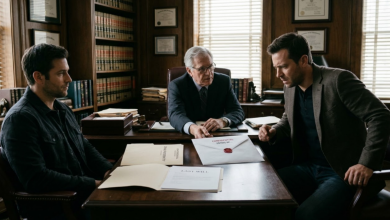
Several days later, family members gather at his attorney’s office. Richard’s children each receive $40,000 and personal belongings. When the narrator’s name is read, the listed gift is an old, damaged brown coat.
The cousins laugh. One suggests Richard has found a final way to criticize the narrator. The coat seems to fit the family’s old picture of him: difficult, unkind, and unable to leave a straightforward affectionate gesture behind.

An Unusual Weight
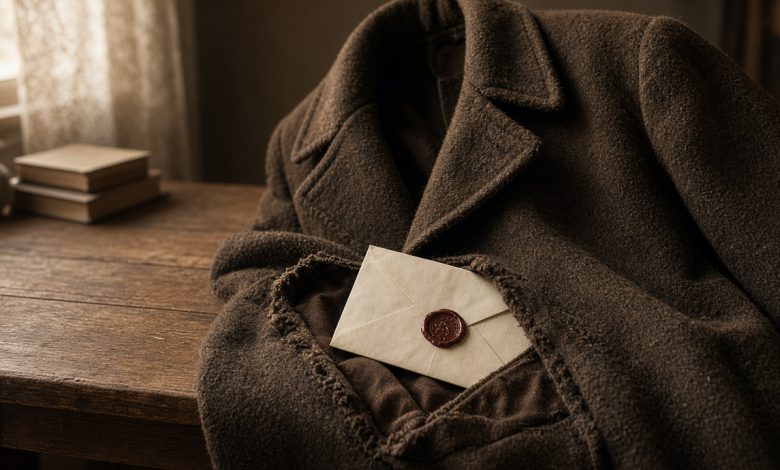
The narrator accepts the coat without arguing. At home, its weight attracts attention. Looking through its pockets and lining reveals a concealed compartment holding a sealed envelope addressed to the narrator.
Inside is a handwritten letter. Richard explains that the hospital visits meant more to him than the narrator could have imagined. He also leaves instructions about something he has kept hidden for years and wants discovered privately.
The available source does not tell us what that hidden thing is, how the instructions are carried out, or what any asset is worth. Those details remain undisclosed. The letter itself is the final concrete discovery the text supplies.

The Old Coat Inheritance Story Changes Meaning
What looked like an insult becomes Richard’s attempt to express gratitude. The narrator understands the gift as perhaps the closest thing to an apology he knew how to offer.
That is where the written narrative ends. The cousins are not shown returning to apologize, no bank transfer is described, and there is no verified account of a fortune being collected. Adding those scenes would create a different story.
Still, the coat has changed. It began as an object judged by its condition and by the family’s expectations. It becomes a container for a message that Richard found difficult to give directly while he was alive.

What the Letter Can—and Cannot—Repair
The story does not ask us to pretend that a late expression of care makes years of criticism harmless. Richard’s regret and the family’s hurt can both belong in the same account.
For the narrator, the visits matter because they reveal something unexpected. For his children, the text supplies much less. We do not know what they feel after the letter, whether they ever learn about it, or how they understand their inheritance.
Leaving those questions open respects the source. It also avoids an easy but unfair finish in which the narrator becomes wholly deserving and everyone else becomes foolish merely for reacting to an old coat at a tense family gathering.
A Note About the Headline’s Promise
A dramatic sum can make a mystery irresistible, but it is not evidence of a financial event. Here, the $600,000 figure belongs to the headline rather than to a fully explained ending in the text.
The honest reading is therefore narrower: a fictional narrator receives a damaged coat, discovers Richard’s letter, and recognizes gratitude behind a seemingly hurtful gift. The instructions hint at another discovery without showing it.
You may wish the source had supplied more. So do readers who expect a complete financial reveal. But a missing detail should remain a missing detail, not become an invented safe, property deed, bank account, or treasure simply because one would make a satisfying final scene.
One reason the coat works as a story object is that it can hold two impressions at once. Its worn surface supports the cousins’ assumption that the gift is worthless. Its hidden lining allows a private message to exist without being visible at the will reading. The narrator’s careful examination changes the interpretation, but not because the fabric suddenly becomes luxurious. What matters is the relationship attached to it. The gift asks the reader to distinguish an object’s condition from the intention behind leaving it.
The hospital scenes also change the narrator before the inheritance is announced. The visits are not described as a strategy to obtain money. They happen without knowledge of what the will contains. Keeping that order intact matters: the connection comes first, and the letter later recognizes it. Turning the ending into a reward scheme would flatten the more interesting part of the narrative, which is that time and attention can matter deeply to someone who has rarely known how to ask for them.
None of this requires a reader to excuse Richard’s earlier behavior. A story can allow a final gesture of gratitude to have meaning while recognizing that an apology may arrive too late to resolve every hurt. The available ending offers understanding, not a complete accounting of the family’s future.
Thanks for spending time with this old coat and its hidden message. This is a fictional story found online, shared for entertainment and reflection—not verified reporting or financial, legal, or relationship advice. Its unrevealed details have not been invented.